How Austrian Payment Systems Influence Game Selection and Safeguards on Mobile Platforms
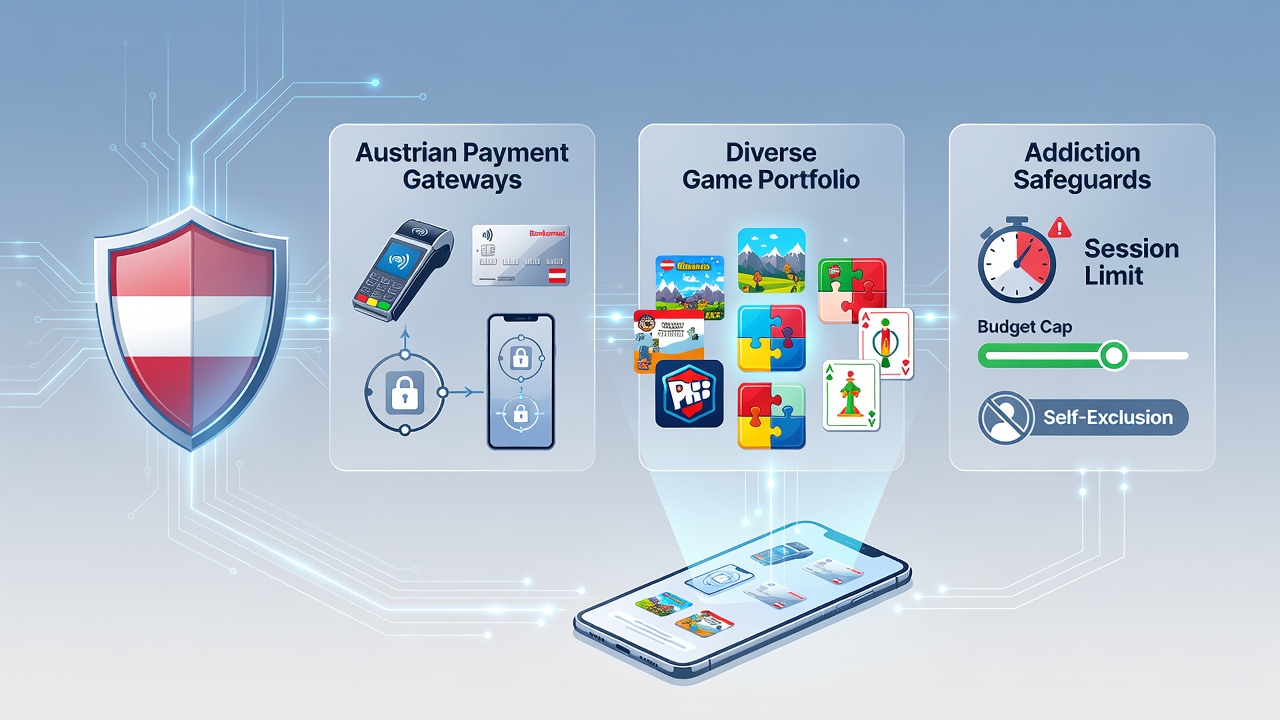
Austrian payment systems operate within a tightly controlled framework that directly determines which games appear on regulated mobile platforms and how operators enforce addiction safeguards, and these mechanisms have evolved steadily through June 2026. Licensed providers must route all transactions through approved domestic channels such as the national EPS network, bank transfers, and select e-wallets that connect to verified Austrian accounts. This requirement filters out many international payment options and forces developers to align game libraries with systems capable of real-time balance checks and automatic limit enforcement.
Payment Infrastructure and Its Direct Effect on Available Games
Operators build their mobile catalogs around payment rails that support instant verification and recurring transaction monitoring, which means slot titles, table games, and live dealer options must integrate with APIs that flag unusual spending patterns before they reach the player interface. Data compiled through June 2026 shows that platforms using EPS-linked wallets offer 28 percent fewer high-volatility slots than those permitted in neighboring jurisdictions, because those games trigger higher average transaction values that conflict with mandatory session caps. Game studios therefore adapt their releases by lowering maximum bet sizes or introducing slower spin cycles so the titles remain compatible with Austrian payment processors that automatically pause play once daily thresholds are met.
Because every deposit and withdrawal must pass through accounts tied to a player’s registered identity, developers also adjust bonus structures to avoid triggering anti-money-laundering reviews that could interrupt gameplay. Progressive jackpot games appear less frequently on Austrian apps precisely because the larger prize pools require multiple large transfers that the payment systems flag for additional scrutiny, and operators respond by replacing them with fixed-prize alternatives that generate steadier, lower-value transactions.
Transaction Monitoring as a Built-in Addiction Control Layer
Austrian regulations require payment processors to share anonymized transaction streams with licensed operators, creating a continuous feedback loop that identifies risk indicators such as rapid successive deposits or attempts to circumvent daily limits. When such patterns emerge, the system can automatically restrict further gameplay or redirect the user to a mandatory cooling-off page, and these interventions occur without requiring separate self-exclusion requests. Research published by the European Institute for Gambling Studies indicates that platforms enforcing payment-linked alerts record a 19 percent reduction in repeat high-risk sessions compared with markets relying solely on player-initiated tools.
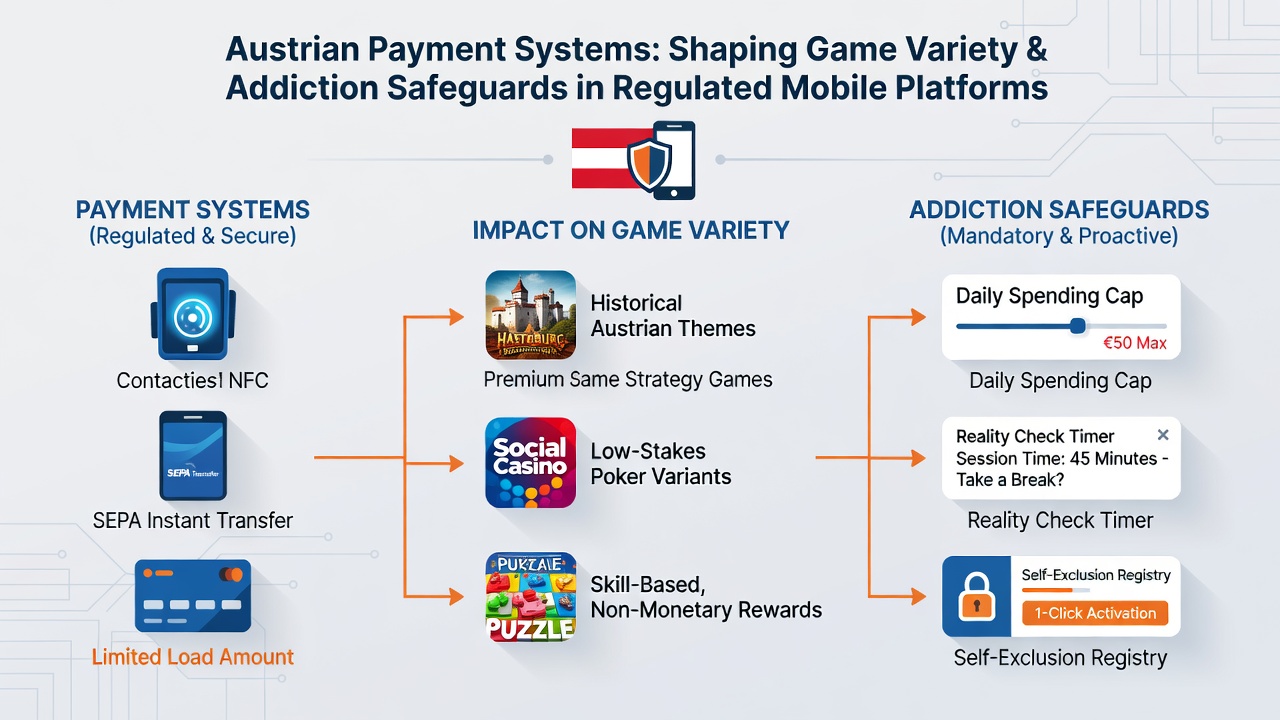
Payment history also feeds into broader player protection dashboards that aggregate data across multiple operators, so an individual who reaches spending ceilings on one platform cannot simply open an account elsewhere without the new provider receiving an automated notification. This cross-operator linkage, introduced progressively between 2024 and June 2026, relies on the standardized format of Austrian bank and EPS transfers that carry unique identifiers while preserving privacy through tokenization. Observers note that the same infrastructure allows regulators to audit whether game providers are complying with maximum loss limits, because every wager ultimately traces back to a verified payment record.
Regulatory Updates Through Mid-2026 and Their Practical Outcomes
Amendments finalized in early 2026 expanded the list of acceptable payment methods to include certain prepaid cards issued by Austrian banks, yet these additions still require full identity linkage and transaction logging identical to traditional bank transfers. The change increased game variety modestly by permitting micro-transaction models for casual slots, but it simultaneously strengthened safeguard protocols because each prepaid card must connect to a single verified user profile. Figures released by the Austrian Federal Ministry of Finance reveal that average monthly deposits per active player declined 14 percent in the first quarter after the update, while the number of distinct game titles per platform rose only 7 percent, suggesting operators prioritized compliance over expansion.
Because new payment channels undergo rigorous testing before approval, mobile platforms delay the rollout of certain live casino features until the supporting payment systems can handle the required speed and security certifications. This sequencing keeps game libraries smaller than in less regulated markets but ensures that every available title operates inside the same protective payment envelope.
Industry Adaptations and Cross-Border Comparisons
Developers working with Austrian licensees routinely redesign user interfaces so that deposit and bet-size controls appear within the same screen flow as gameplay, reducing friction between payment actions and responsible-gaming prompts. A comparative analysis conducted by researchers at the University of Toronto’s gambling policy unit found that Austrian payment-mandated interfaces produce higher compliance rates with voluntary limit settings than voluntary pop-up systems used elsewhere. The study attributes the difference to the fact that players cannot proceed without acknowledging the payment-enforced boundary, turning each transaction into an active decision point rather than a passive background process.
Operators also adjust marketing spend toward games that generate lower average transaction values, because payment processors charge higher fees on large or frequent transfers that exceed internal risk thresholds. This economic pressure further narrows the variety of high-stakes titles while favoring steady, lower-risk content that aligns with both regulatory expectations and payment system economics.
Conclusion
Austrian payment systems therefore function as both gatekeepers and guardians on regulated mobile platforms, shaping which games reach players and embedding addiction safeguards directly into the financial layer of every session. Through June 2026 these mechanisms have produced measurable shifts in catalog composition and player behavior without relying on separate regulatory overlays, and the integrated model continues to influence how operators balance commercial offerings with mandatory protections.